
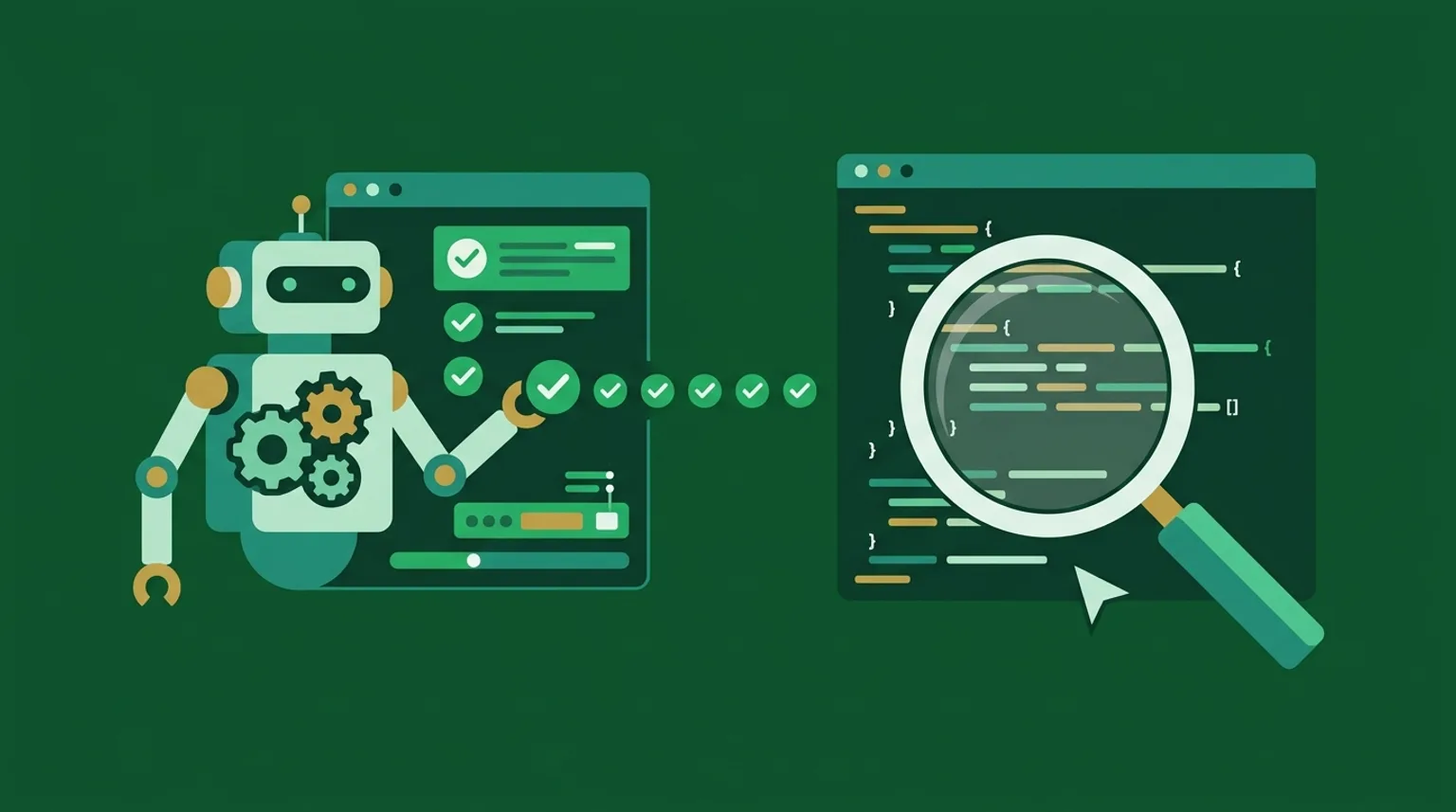
Automated vs Manual Testing: What Your Business Needs
Understand the difference between automated and manual testing, when to use each, and how to combine them to ship reliable software without overspending.
Every company that builds software needs to make sure it works — but the same question always comes up: is it better to invest in manual or automated testing? The short answer is "it depends on the context." In this post, we explain the difference between the two, when to use each, and how to combine them to deliver quality without wasting resources.
What Manual Testing Is
In manual testing, a QA team member runs the software the way a user would: navigating the screens, filling out forms, and checking that everything behaves as expected.
It's essential when human judgment is what matters: assessing whether the experience makes sense, whether the visuals are right, and whether something "feels off." The downside is that, with every new version, you have to repeat everything from scratch — which is time-consuming and doesn't scale.
What Automated Testing Is
In automated testing, scripts run the checks on their own, quickly and repeatably. Once written, they can run hundreds of times — with every code change — without human effort.
They're ideal for protecting what already works: ensuring that a new change hasn't broken anything that already existed (the well-known regression test). The cost lies in creating and maintaining the scripts, which require technical work.
When to Use Each
It's not "one or the other" — each type shines in different situations:
- Use manual testing for — new features, usability assessment, exploratory testing, and visual validation;
- Use automated testing for — critical, repetitive flows, regression, APIs, and scenarios that run on every deploy.
The rule of thumb: what repeats often is worth automating; what requires human perception stays manual.
Why Combine Both
The companies that ship the most reliable software almost always use a hybrid strategy:
- Automation covers the base — tests that run on their own with every change, giving you the confidence to ship fast;
- Manual covers the top — the critical eye on experience, new cases, and what automation can't capture.
This gives you speed without sacrificing quality: the team ships frequently, confident that nothing important broke.
How to Start on the Right Foot
You don't need to automate everything at once. The most efficient path is to automate the most critical and most repeated flows first — usually login, checkout, and the core APIs — and keep manual testing where human judgment adds the most value.
At QuickLab, we offer Quality Assurance as a service, with both manual and automated testing, helping define the right strategy for your product and your budget.
Want to ship stable software with no surprises? Talk to our team and find the best testing strategy for your case.
Veja como a QuickLab pode ajudar o seu negócio: Quality Assurance



Pronto para tirar seu projeto digital do papel?
Fale com a QuickLab e receba uma proposta sob medida para o seu projeto.
